

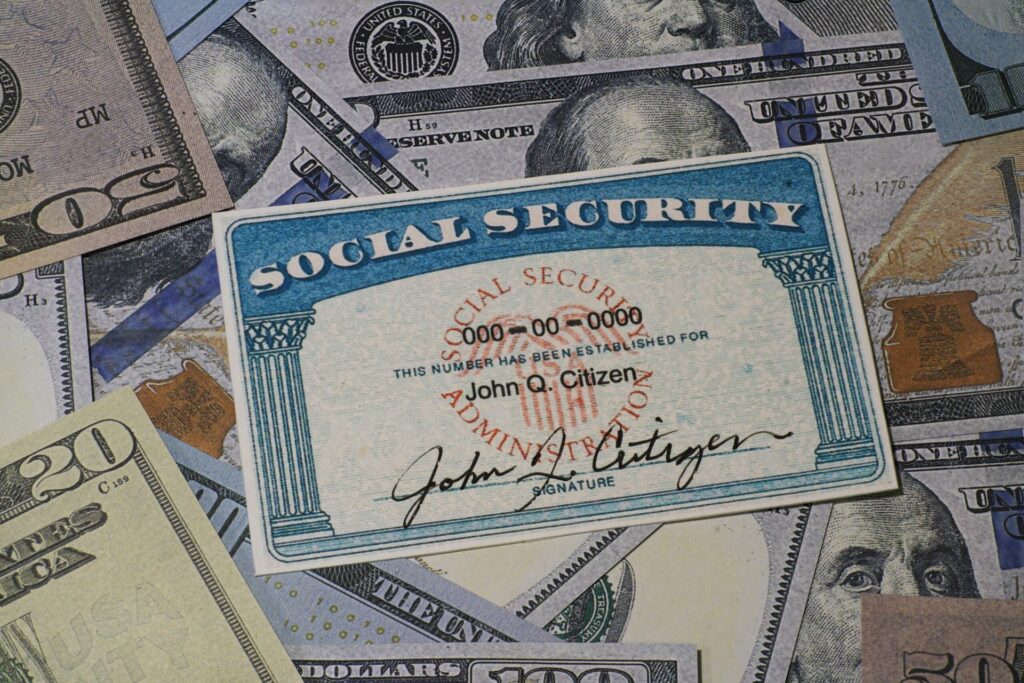
Social Security Takes $1 of Every $2 You Earn Over $24,480 — but You’re Not Losing It. Here’s the Payback Nobody Explains
Working and collecting Social Security before full retirement age? Here’s what happens: Earn more than $24,480 this year, and Social Security keeps $1 of every $2 above that line.
Most personal finance sites stop right there, with a scary number and a shrug. What almost none of them tell you is the second half of the story. That money isn’t gone. It’s coming back — just not the way you’d expect.
I’ve been a CPA since 1981, and I’ve watched this rule terrify people for over four decades. So let’s walk through exactly what Social Security takes, when it takes it, and how it pays you back.
The rule, in plain English
If you claim Social Security before your full retirement age — 67 for anyone born in 1960 or later — and you keep working, the government applies what it calls the retirement earnings test.
For 2026, the numbers on Social Security’s own page are these: If you’re under full retirement age all year, you can earn $24,480 with no penalty. Above that, Social Security withholds $1 in benefits for every $2 you earn.
In the year you reach full retirement age, the limit jumps to $65,160, and the bite drops to $1 for every $3. Only the months before the one in which you reach full retirement age count. Once you hit full retirement age, the test disappears. Earn a million dollars, and they won’t touch a dime.
Only wages and net self-employment income count. Pensions, IRA withdrawals, interest, dividends, capital gains and annuity payments don’t. So a retiree living on a 401(k) and a part-time job only has to watch the part-time job.
What it looks like in dollars
Say you’re 65, you claimed early, and your benefit is about $2,000 a month. You’re still working, pulling in $60,000 a year.
Your earnings run $35,520 over the $24,480 limit. Half of that — $17,760 — is what Social Security withholds for the year. Averaged out, that’s $1,480 a month, leaving you $520.
Except that’s not how the check actually arrives. Social Security doesn’t trim each payment. It withholds whole checks, starting in January, until it has collected what it’s owed. In this example, that’s roughly nine months of nothing; then your normal $2,000 checks resume in the fall.
If you earned more than you estimated, you’ll owe the difference. If you earned less, they’ll send you a refund. Either way, tell them your expected earnings early. Surprises here are expensive.
The part nobody explains: You get it back
Here’s the sentence on Social Security’s website that ought to be in the headline of every earnings-test story:
“We will recalculate your benefit amount to give you credit for the months we reduced or withheld benefits due to your excess earnings.”
Translation: When you reach full retirement age, Social Security looks back at every month it withheld a check and treats you as if you hadn’t claimed yet in those months. Fewer months of early claiming means a smaller early-claiming reduction. Your check goes up — for life.
Social Security’s guide, “How Work Affects Your Benefits,” uses this example: Someone who claims at 62 gets $910 a month. Twelve months of benefits get withheld because of work. At 67, the benefit is recalculated to $975 a month. That extra $65 a month lasts as long as they do.
Run it on our $60,000 earner. Claiming at 65 means 24 months early, which trims a $2,300 full benefit to about $1,993.
If nine checks a year are withheld at 65 and 66, that’s 18 months credited back. At 67, the reduction shrinks from 24 months to six. The new check is roughly $2,223, about $230 more a month, forever.
So the “penalty” is really a forced deferral. You’re lending Social Security $35,520 over two years, interest-free, and it repays you $230 a month for the rest of your life.
One quick note — I’ve won two Emmys for reporting on money, but what I’m proudest of is helping regular people build real wealth. Sign up for the free Money Talks Newsletter and I’ll help you do exactly that. 10 seconds, no fluff, no spam.
Now the CPA in me has to spoil it a little
An interest-free loan that’s repaid to you over your lifetime is still a loan you made. In our example, $35,520 withheld divided by $230 a month means you break even in about 13 years — at roughly age 80.
Live past that and you come out ahead. If you don’t, Social Security keeps the difference.
That’s not a reason to panic. Plug your birthday into Social Security’s life expectancy calculator and, for most 65-year-olds, the average lands well past 80.
But it is a reason to stop pretending the earnings test is a free lunch in either direction. It’s neither theft nor a gift. It’s a timing rule.
There’s also a tax wrinkle. Your income, tax-exempt interest and half your Social Security benefits count toward what the IRS calls combined income. Cross $25,000 as a single filer or $32,000 as a couple, and part of your benefit becomes taxable.
Those thresholds were set in 1984 and have never been adjusted for inflation. I cover how that trap works in “Why a $10,000 IRA Withdrawal Cost This Retiree $2,220 in Tax.”
What to do about it
If you haven’t claimed yet and you’re still working: Wait to claim. This is the simplest answer in personal finance. If your wages are well above $24,480, claiming early mostly means handing Social Security checks to hold for you. Wait until you stop working or hit full retirement age, whichever comes first.
I’ve written before about the blunders even experts make with Social Security, and claiming while working full time is near the top.
If you already claimed and went back to work: You have 12 months from approval to withdraw your application, repay everything you received and start over later as if you’d never claimed. You get one shot at that.
After the window closes, you can still ask Social Security to suspend your benefits once you reach full retirement age, earning delayed credits every month until 70.
If you’re retiring midyear: Ask about the monthly rule. In your first year, Social Security can treat you as retired in any month you earn $2,040 or less, even if your total for the year blew past the annual limit because of the months you were still working.
If you’re 66 and closing in on 67: Watch the higher limit, $65,160, and remember only the months before your full-retirement-age month count. Many people can work nearly a full year in that window without losing a check.
The bottom line
Nearly half of older Americans work after they start collecting Social Security — 43%, according to research we reported on recently. Most of them aren’t doing it for fun. They need the money, and they need to know what the earnings test really costs.
The answer: less than the headlines say, more than zero. Social Security takes your checks now and pays them back slowly later.
If you can avoid the whole dance by waiting to claim, do that. If you can’t, at least know that the money you’re “losing” has your name on it.