

Cruises Are Booming. Are the Crew Members Benefiting Too?
Cruise lines have reaped the rewards of a healthy appetite for vacations at sea, but travelers may wonder what that means for the crew members working on the ships.
Carnival Corp., the world’s largest cruise company, reported its highest-ever revenues and net income earlier this fall – even against a backdrop of geopolitical conflict and increased fuel prices.
“Our booking trends continued to strengthen throughout the quarter, with volumes meaningfully ahead of last year and far outpacing capacity growth,” CEO Josh Weinstein said in a Sept. 29 news release about third-quarter earnings. “This momentum underscores the effectiveness of our demand generation efforts and the enduring appeal of our cruise lines.”
Cruise guest numbers have soared in recent years, with 37.2 million oceangoing passengers setting sail in 2025, up from 34.6 million the year before, according to Cruise Lines International Association’s State of the Cruise Industry Report (though some brands have been leaning into promotional activity amid increased capacity and softer demand in the Caribbean).
As for whether shipboard employees benefit as a result, Larry Pimentel, Cruise Executive-in-Residence at Florida International University’s Chaplin School of Hospitality & Tourism Management, told USA TODAY that “the honest answer is ‘yes, but unevenly.’”
Do Crew Members Benefit From Increased Cruise Demand?
Yes, in some ways. Compensation for employees in guest-facing roles, for example – such as cabin stewards or restaurant servers – is commonly made up of base wages and pooled gratuities and service charges, according to Pimentel, former president and CEO of Azamara and Cunard Line, among others, as well as cofounder of SeaDream Yacht Club.
“Strong demand helps in two ways: fuller ships mean more guests paying the daily gratuity and more onboard spending on drinks and specialty dining that carry an (18%-20%) service charge, so the pools are larger; and several major lines raised their daily gratuity rates this year, which they publicly tied to keeping crew pay competitive,” he said in an email.
At the same time, new ship capacity has contributed to a tighter labor market. There are more than 60 vessels on order through 2037 among member lines of CLIA, the industry’s leading trade organization.
“When ships are chasing qualified people, crew gains leverage, and that shows up in higher offers for scarce skills, faster promotion, and more attention to retention and onboard quality of life,” Pimentel added.
Bettina A. Deynes, global chief human resources officer at Carnival Corp., which operates major brands such as Carnival Cruise Line, Holland America Line and Princess Cruises, said more customers are learning that traveling by cruise offers value and an “extraordinary” experience, and the company’s “amazing team members are what make it all possible.”
“As cruising grows, so does the need for talented people, and we want to be the place they choose to work,” she told USA TODAY in an emailed statement. “That means competitive pay and benefits, room to grow your career on our ships and on shore and regularly reviewing our programs to make sure we can attract great people and keep them.”
Carnival Corp. did not share specific numbers regarding crew promotions or raises.
Among the two other major publicly traded cruise companies, Norwegian Cruise Line Holdings declined to comment, and Royal Caribbean Group did not immediately respond to a separate inquiry.
Higher Demand Does Not Always Mean Better Contracts
However, it’s not all straightforward.
While mainstream cruise lines automatically add gratuities to guests’ onboard accounts, passengers can remove or reduce them prior to disembarking (luxury brands typically bundle gratuities with the cruise fare). Some roles, such as engineering or other technical staff, are not tipped at all.
“Contracts remain long and the hours are demanding, and the benefits of a strong market reach officers and service staff sooner than they reach entry-level positions,” Pimentel said. “And lines are under their own cost pressure (especially fuel costs), so higher demand does not automatically translate into richer contracts.”
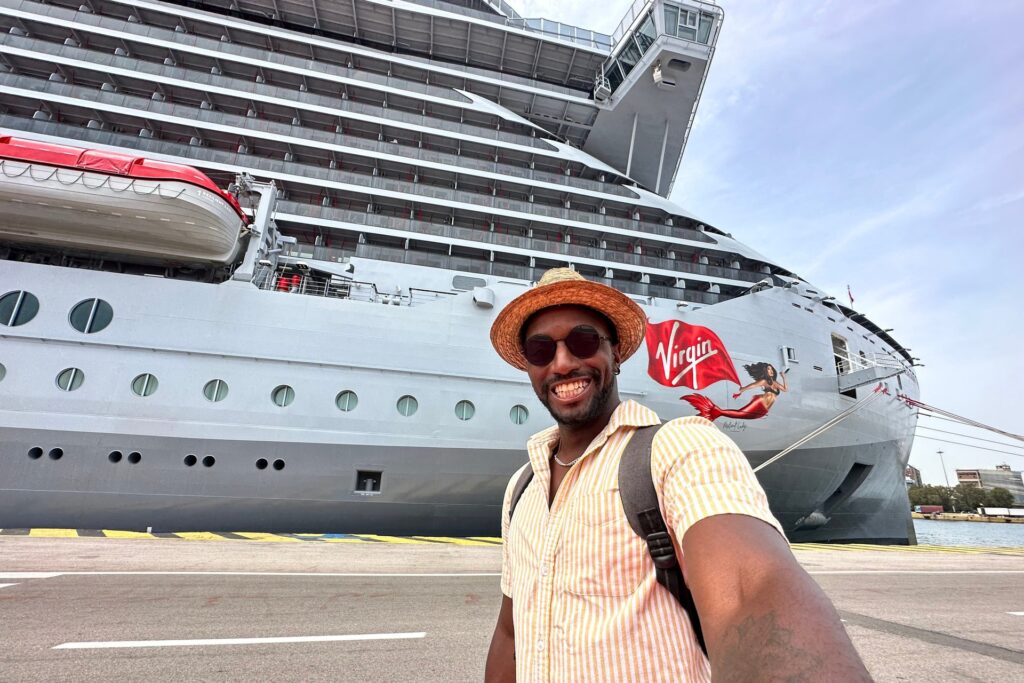
Justin Scott, who has worked in entertainment roles on cruise ships on and off since 2012 on ships operated by Norwegian Cruise Line and Virgin Voyages, echoed that, noting that ships can source talent from around the world.
If employees push for higher pay or certain accommodations, Scott warned, cruise lines could simply hire someone else.
Scott generally views high cruise travel demand as “more of a benefit for the crew members.”
“The more cruising grows in popularity, especially with these mega-ships that they’re building, the more job opportunities that are going to come in,” he said. “The more job opportunities that come in, the more money people could potentially make alongside more passengers that are sailing every year.”
On the flip side, Scott – who also runs the YouTube channel The Shiplife – has noticed high turnover, in part due to employees “leaving to go to other companies that they think are better.” In his experience, opportunities for advancement can feel limited, though entertainment staff could become cruise directors or take a shoreside job.
Norwegian said it did not have details to share on Scott’s experience, and Virgin did not immediately respond to a separate request for comment.
Scott has made between roughly $2,000 and $4,500 per month on ships depending on the contract, with employment periods typically lasting six months (those roles don’t usually receive tips). Crew member earnings can vary widely depending on a number of factors, including the cruise line, the employee’s experience level and others. Compensation for workers on cruises “is not governed by one universal wage system,” Pimentel added.
“Understanding an individual crew member’s position requires examining the applicable maritime and national requirements, any relevant collective bargaining agreement, and the employment contract,” he said.
The notion of competitive pay is relative, depending on what the wages are worth in employees’ home countries. Crew members of more than 75 nationalities work together at a given time on CLIA member lines, according to the organization’s website.
Rather than demand alone, Pimentel argued the biggest current advantage crew members have is “the shortage of trained people relative to the ships being delivered.”
That, he said, “is what changes the bargaining equation.”
Nathan Diller is a consumer travel reporter for USA TODAY based in Nashville. You can reach him at [email protected].
Reporting by Nathan Diller, USA TODAY / USA TODAY
USA TODAY Network via Reuters Connect