

6 Examples for Describing Yourself in an Interview (and Why They Work)
Editor’s Note: This story originally appeared on Zety.com.
When an interviewer asks, “How would you describe yourself?,” they’re throwing you a softball. Learn how to describe yourself in an interview so you don’t strike out from the start.
Read on to learn how to describe yourself in an interview and actually impress.
You’ll find out the intent behind interviewers asking you to describe yourself and see examples of a great response.
The Intent Behind This Common Interview Question
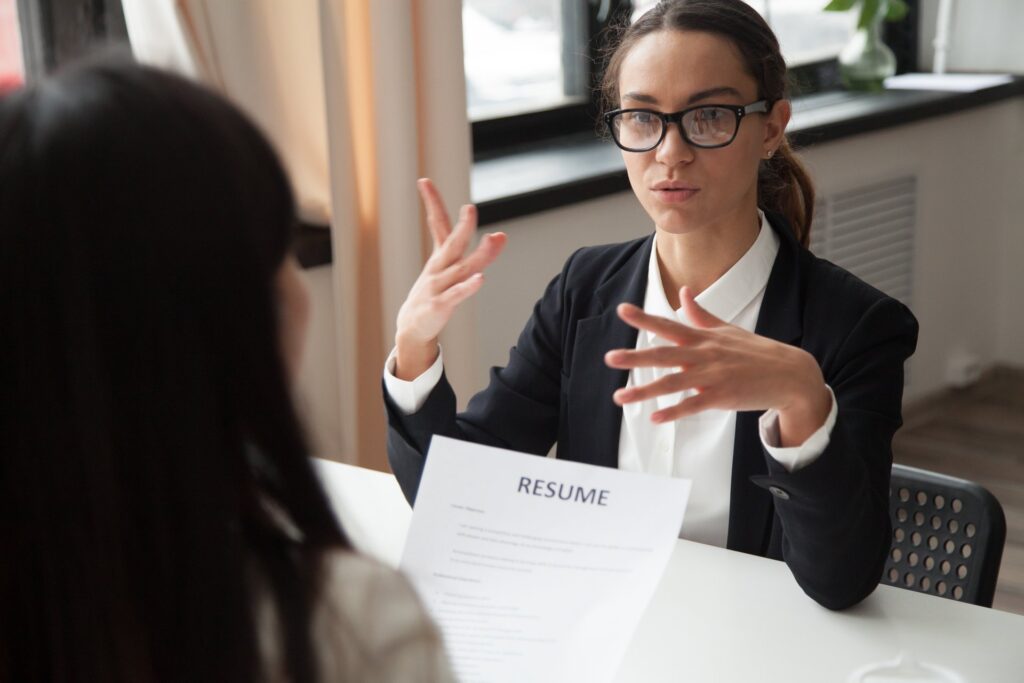
Many interviews kick off with the hiring manager asking you to describe yourself. At first glance, the question seems like a benign and friendly way for the interviewer to get to know you.
And in many ways, it is. It’s a light-hearted question that helps lighten the mood and warm things up before more difficult interview questions.
But that doesn’t mean there’s no wrong way to answer it. In fact, there are many ways to screw your response up. To figure out what makes a good answer, it helps to know why interviewers so often ask some variation of “Tell me about yourself.”
The two main things an HR manager is looking for are:
- To see your interpersonal skills in action.
- To get acquainted with you on a professional level.
The best way to describe yourself will be fulfilling both of those requirements.
First things first, soft skills are important. The key to showing off your soft skills while answering this question, or any interview question, is to appear confident, remain calm, maintain eye contact, listen carefully, and respond succinctly without rambling.
The second key to describing yourself is to make sure you’re answering the question in a professional way. You may be a very funny person, but describing yourself as a class clown won’t help you land that software engineering job. Instead, use professional words to describe yourself and leave out any personal details.
Examples of How to Describe Yourself in an Interview
Let’s get concrete. Here are some real-life examples of how to describe yourself in an interview.
As persistent
Example answer:
“I’m persistent. Once I set my eyes on the prize, I work hard to achieve my goal. In my role as marketing coordinator at Boston & Borris, I organized marketing campaigns with budgets over $250,000.
The bar was set very high for those campaigns in terms of OKRs, but I continuously analyzed our content metrics to suggest new ideas whenever the current strategy wasn’t delivering.”
Why it works:
Find character traits that give you the opportunity to talk about your biggest career wins and achievements. Bringing up your accomplishments also provides an opportunity for the hiring manager to ask follow-up questions and create a natural flow to the conversation.
As highly organized
Example answer:
“I’m someone who loves to be organized. As the junior project manager at TechBubble, I was constantly creating and modifying existing project procedures to make our processes more efficient. When I saved my team 10 hours of collective work by simplifying the organizational structure in our project management system, I felt warm and fuzzy inside.”
Why it works:
The way to hit a home run when describing yourself in an interview is to figure out which skills are most important in the job ad and highlighting the ones you embody. In this example, if one of the requirements was organizational skills, then this answer checked that box without a doubt.
As creative
Example answer:
“I love letting my creative juices flow. When I was the graphic designer at Rainbow Media, I often led brainstorming sessions with clients to come up with new brand logos, icons, typography, and other marketing material.
While there, I developed over 50 complete brand strategies that satisfied even the most demanding clients. If you’d like, I could go into more detail on a few in my portfolio.”
Why it works:
Creativity is one of the most difficult job skills to provide proof of, and yet it’s a must-have for many professional fields. Using your answer to bring up your portfolio or other pieces of evidence can turn creativity from something airy-fairy to a skill with real-world results.
As dedicated
Example answer:
“I would have to say I’m dedicated. Although this will be my first year teaching full-time, I’ve been tutoring students one-on-one for over six years. During that time, I’ve gone above and beyond helping students turn around their grades and receive competitive scores in standardized testing.
The secret to my success is that I am internally motivated to help youth reach their goals.”
Why it works:
Describing yourself as passionate or dedicated can tell the interviewer that the job you’re applying for is more than just a job to you. With that said, be careful with these terms. This is a trait often implied by candidates, so you can come off as dishonest if the HR manager is unconvinced of your authenticity.
As detail-oriented
Example answer:
“Well, I’m detail-oriented. I have over 5 years of experience in nursing, and in that time I’ve developed a talent for noticing small details that could be otherwise easily looked over. As you know, this is one of those skills that is quite difficult when you’re working in a fast-paced environment like a hospital.
But I think my attention to detail is what allowed me to maintain 96% positive patient scores even while handling up to 10 patients at a time.”
Why it works:
Being detail-oriented is crucial for some jobs, and relating to the HR manager is a great way to build rapport and make a good impression. This works especially well when the hiring manager has been in the same role as the one you’re applying for. Just remember not to oversell yourself, as an experienced professional is likely to catch a whiff of your exaggerations.
As sociable
Example answer:
“I’m a sociable person. I’m quite extroverted, so I get more energized when I’m in direct contact with people. As a customer service professional at XYZ Inc, I was constantly interacting with clients and I loved it.
Being able to communicate with customers in a casual way was the best part of my day. I think that’s part of why I was able to maintain a customer retention rate 25% above the average.”
Why it works:
You can’t go wrong when describing yourself if you talk about your communication skills. They’re the key job skill in many roles. Just remember—with this character trait, you’ll have to walk the talk. You can’t talk about your great communication skills while mumbling and looking at the interviewer’s feet.